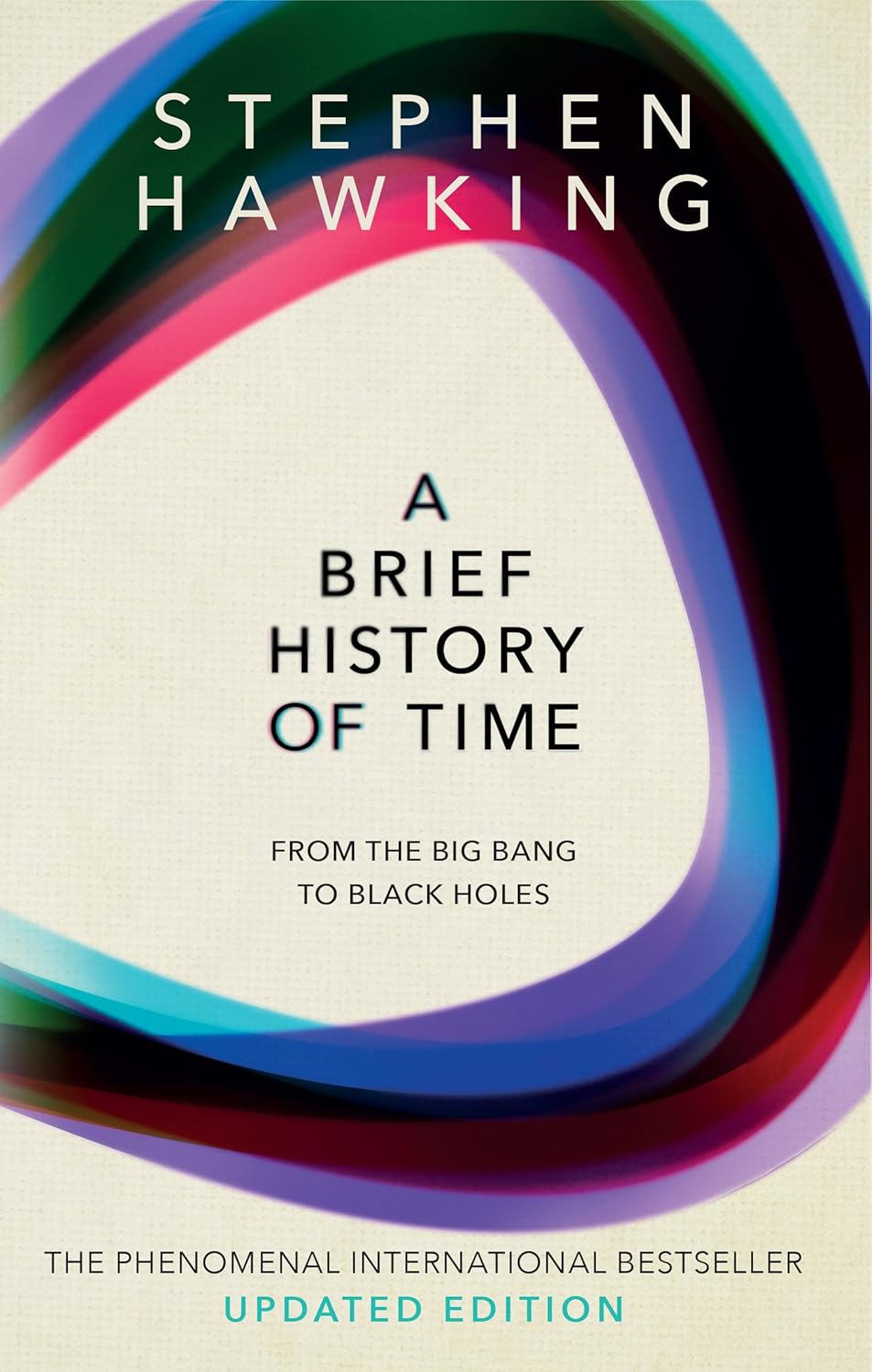
Our Picture of the Universe
Summary:
Our understanding of the universe has evolved from ancient geocentric models to a modern framework based on general relativity and quantum mechanics. Observations and theoretical advances have progressively replaced intuitive pictures with mathematical descriptions that explain large-scale structure and fundamental laws.
Key points:
- Historical progression from Aristotle and Ptolemy to Copernicus, Kepler, and Newton.
- Modern picture relies on general relativity for gravity and quantum theory for small scales.
- Observations (e.g., galactic motions, cosmic background) drive and test theoretical models.
Themes & relevance:
Scientific models change as evidence improves, and contemporary cosmology unifies observations with fundamental laws to describe the universe.
Takeaway / How to use:
Update your explanations to match evidence and use both theory and observation to build reliable models.
Key points
- Historical progression from Aristotle and Ptolemy to Copernicus, Kepler, and Newton.
- Modern picture relies on general relativity for gravity and quantum theory for small scales.
- Observations (e.g., galactic motions, cosmic background) drive and test theoretical models.
Space and Time
Summary:
Special and general relativity reformulate space and time as a unified four-dimensional spacetime where measurements of time and distance depend on the observer. Gravity is not a force in the Newtonian sense but a manifestation of spacetime curvature produced by mass and energy.
Key points:
- Special relativity: constancy of the speed of light and relativity of simultaneity.
- Time dilation and length contraction follow from Lorentz transformations.
- General relativity: equivalence principle and gravity as spacetime curvature.
- Predictions include gravitational time dilation and light bending by mass.
Themes & relevance:
Changing notions of space and time reshape physical intuition and have practical impacts (e.g., GPS requires relativistic corrections).
Takeaway / How to use:
Think of gravity as geometry and treat time as relative when analyzing high-speed or strong
- gravity situations.
Key points
- Special relativity: constancy of the speed of light and relativity of simultaneity.
- Time dilation and length contraction follow from Lorentz transformations.
- General relativity: equivalence principle and gravity as spacetime curvature.
- Predictions include gravitational time dilation and light bending by mass.
The Expanding Universe
Summary:
Observations of galactic redshifts show the universe is expanding, leading to the idea that it was denser and hotter in the past. This empirical expansion underlies the Big Bang model and is supported by further evidence such as the cosmic microwave background.
Key points:
- Hubble's law relates galactic recession velocity to distance, indicating expansion.
- Expansion implies a hotter, denser early state (Big Bang concept).
- Cosmic microwave background radiation is a relic of the early hot phase.
- The geometry and destiny of the universe depend on its total energy density and cosmological constant.
Themes & relevance:
Cosmology links astronomical observation to fundamental physics, allowing inferences about the universe's history and large-scale properties.
Takeaway / How to use:
Use redshift and background radiation measurements to constrain models of cosmic history and geometry.
Key points
- Hubble's law relates galactic recession velocity to distance, indicating expansion.
- Expansion implies a hotter, denser early state (Big Bang concept).
- Cosmic microwave background radiation is a relic of the early hot phase.
- The geometry and destiny of the universe depend on its total energy density and cosmological constant.
The Uncertainty Principle
Summary:
Quantum mechanics replaces deterministic trajectories with probabilistic descriptions, encapsulated by the uncertainty principle that limits simultaneous knowledge of complementary quantities like position and momentum. These quantum effects dominate at small scales and influence processes from atomic structure to particle creation.
Key points:
- Heisenberg uncertainty principle: intrinsic limits on measurement precision for conjugate variables.
- Wave
- particle duality and probabilistic interpretation of the wave function.
- Quantum fluctuations can have observable consequences, especially in the early universe.
- Measurement affects the system, challenging classical deterministic views.
Themes & relevance:
Quantum uncertainty imposes fundamental limits on prediction and motivates probabilistic rather than purely deterministic models of nature.
Takeaway / How to use:
Account for intrinsic quantum uncertainty when making predictions about microscopic systems.
Key points
- Heisenberg uncertainty principle: intrinsic limits on measurement precision for conjugate variables.
- Wave
- particle duality and probabilistic interpretation of the wave function.
- Quantum fluctuations can have observable consequences, especially in the early universe.
- Measurement affects the system, challenging classical deterministic views.
Elementary Particles and the Forces of Nature
Summary:
Matter is built from a small set of elementary particles whose interactions are governed by fundamental forces mediated by exchange particles. The Standard Model organizes these particles and forces, while ongoing efforts seek a deeper unified theory that includes gravity.
Key points:
- Fundamental constituents: quarks, leptons, and their antiparticles.
- Forces mediated by gauge bosons: electromagnetic, weak, and strong interactions.
- Symmetry principles and conservation laws underpin particle interactions.
- Attempts at unification aim to reconcile forces within a single theoretical framework (grand unified theories and quantum gravity).
Themes & relevance:
Understanding particles and forces reveals the microphysical basis for macroscopic phenomena and guides experimental tests (e.g., accelerators).
Takeaway / How to use:
Use symmetry and conservation principles to classify interactions and predict particle behavior.
Key points
- Fundamental constituents: quarks, leptons, and their antiparticles.
- Forces mediated by gauge bosons: electromagnetic, weak, and strong interactions.
- Symmetry principles and conservation laws underpin particle interactions.
- Attempts at unification aim to reconcile forces within a single theoretical framework (grand unified theories and quantum gravity).
Black Holes
Summary:
Black holes are regions of spacetime where gravity is so strong that not even light can escape, described by solutions of general relativity like the Schwarzschild metric. They form from gravitational collapse and feature event horizons and singularities where classical theory breaks down.
Key points:
- Event horizon: the boundary beyond which escape is impossible.
- Schwarzschild solution describes a non
- rotating black hole; rotating and charged solutions generalize it.
- Gravitational collapse can produce a singularity hidden by an event horizon (cosmic censorship, inferred).
- Close to a black hole, strong gravitational time dilation and light deflection occur.
Themes & relevance:
Black holes probe extreme gravity and test general relativity in regimes inaccessible elsewhere, highlighting where new physics may be needed.
Takeaway / How to use:
Use black holes as theoretical laboratories for exploring the interplay of gravity, geometry, and quantum effects.
Key points
- Event horizon: the boundary beyond which escape is impossible.
- Schwarzschild solution describes a non
- rotating black hole; rotating and charged solutions generalize it.
- Gravitational collapse can produce a singularity hidden by an event horizon (cosmic censorship, inferred).
- Close to a black hole, strong gravitational time dilation and light deflection occur.
Black Holes Ain't So Black
Summary:
Quantum effects near an event horizon lead to particle creation, giving black holes a temperature and causing them to emit Hawking radiation and slowly evaporate. This links thermodynamics, quantum theory, and gravity, and raises deep questions about information loss.
Key points:
- Quantum field theory in curved spacetime predicts particle emission from black holes (Hawking radiation).
- Black hole temperature is inversely proportional to mass; entropy is proportional to horizon area.
- Black holes can evaporate over long timescales, implying they are not perfectly black.
- The information loss paradox arises from the tension between quantum unitary evolution and apparent information destruction.
Themes & relevance:
The thermodynamic properties of black holes force a reconciliation of quantum mechanics and general relativity and motivate quantum gravity research.
Takeaway / How to use:
Include quantum effects when analyzing horizons and consider entropy-area relations in extreme
- gravity problems.
Key points
- Quantum field theory in curved spacetime predicts particle emission from black holes (Hawking radiation).
- Black hole temperature is inversely proportional to mass; entropy is proportional to horizon area.
- Black holes can evaporate over long timescales, implying they are not perfectly black.
- The information loss paradox arises from the tension between quantum unitary evolution and apparent information destruction.
The Origin and Fate of the Universe
Summary:
Cosmological models based on general relativity suggest the universe began in a hot, dense state and its future depends on parameters like mass-energy density and the cosmological constant. Quantum cosmology proposals (e.g., no
- boundary ideas) attempt to describe the initial conditions and address singularities.
Key points:
- Big Bang cosmology implies a singular origin under classical GR, motivating quantum approaches to the initial state.
- The universe's fate (recollapse, endless expansion, or marginally bound) depends on density and dark energy.
- Quantum effects may remove classical singularities and allow probabilistic descriptions of the universe's origin.
- Observations of expansion rate and cosmic composition are crucial to predicting future evolution.
Themes & relevance:
Cosmology unites observations and theory to address ultimate questions about origins and destiny, with quantum gravity central to resolving the initial singularity.
Takeaway / How to use:
Use current measurements of expansion and density to evaluate cosmological models and refine expectations for the universe's future.
Key points
- Big Bang cosmology implies a singular origin under classical GR, motivating quantum approaches to the initial state.
- The universe's fate (recollapse, endless expansion, or marginally bound) depends on density and dark energy.
- Quantum effects may remove classical singularities and allow probabilistic descriptions of the universe's origin.
- Observations of expansion rate and cosmic composition are crucial to predicting future evolution.
The Arrow of Time
Summary:
Time appears to have a direction — from past to future — that is not obvious from the time-symmetric laws of physics. Hawking surveys the different 'arrows' (thermodynamic, psychological, cosmological, and radiation) and links the macroscopic direction of time to the universe's low
- entropy initial state.
Key points:
- The second law of thermodynamics (entropy increase) defines the thermodynamic arrow of time and underlies the apparent irreversibility of macroscopic processes.
- The psychological arrow (our memory and experience) aligns with the thermodynamic arrow because records form as entropy increases.
- The cosmological arrow (universe expansion) may set boundary conditions that determine the direction of other arrows.
- Radiation has a preferred direction (waves radiate outward), which is related to boundary conditions on fields in the past and future.
- Explaining the arrow of time requires an account of the universe’s initial low
- entropy state rather than a modification of fundamental time-symmetric laws.
Themes & relevance:
This chapter connects fundamental, time-symmetric microphysics to everyday irreversible phenomena by emphasizing initial conditions of the universe and showing why cosmology matters for thermodynamics. It highlights why questions about the beginning of the universe are essential for understanding time itself.
Takeaway / How to use:
When reasoning about irreversible processes, consider the role of initial cosmolo...
Key points
- The second law of thermodynamics (entropy increase) defines the thermodynamic arrow of time and underlies the apparent irreversibility of macroscopic processes.
- The psychological arrow (our memory and experience) aligns with the thermodynamic arrow because records form as entropy increases.
- The cosmological arrow (universe expansion) may set boundary conditions that determine the direction of other arrows.
- Radiation has a preferred direction (waves radiate outward), which is related to boundary conditions on fields in the past and future.
- Explaining the arrow of time requires an account of the universe’s initial low
- entropy state rather than a modification of fundamental time-symmetric laws.
Wormholes and Time Travel
Summary:
Hawking explains how general relativity admits solutions (like wormholes and Einstein–Rosen bridges) that, in principle, could allow shortcuts through spacetime and even closed timelike curves. He discusses the physical obstacles, paradoxes of time travel, and arguments why such solutions are likely prevented or nontraversable in realistic physics.
Key points:
- General relativity permits geometries (wormholes) that connect distant regions of spacetime, but most such solutions are unstable or nontraversable.
- Traversable wormholes would require exotic matter violating energy conditions (negative energy density) to keep them open.
- Closed timelike curves lead to causal paradoxes (e.g., the grandfather paradox) that challenge consistency of physical laws.
- Hawking and others have argued mechanisms (quantum effects, instabilities) that likely prevent macroscopic time travel and protect causality (chronology protection).
Themes & relevance:
The chapter probes the tension between mathematical solutions of general relativity and physical plausibility, illustrating how consistency and quantum considerations constrain exotic possibilities like time travel. It shows why causality remains a guiding principle in assessing speculative spacetime models.
Takeaway / How to use:
Treat wormholes and time-travel solutions as useful thought experiments but require careful assessment of quantum effects and energy conditions before accepting them as physically r...
Key points
- General relativity permits geometries (wormholes) that connect distant regions of spacetime, but most such solutions are unstable or nontraversable.
- Traversable wormholes would require exotic matter violating energy conditions (negative energy density) to keep them open.
- Closed timelike curves lead to causal paradoxes (e.g., the grandfather paradox) that challenge consistency of physical laws.
- Hawking and others have argued mechanisms (quantum effects, instabilities) that likely prevent macroscopic time travel and protect causality (chronology protection).
The Unification of Physics
Summary:
Hawking outlines the search for a single, unified theory that reconciles general relativity with quantum mechanics and accounts for the initial conditions of the universe. He surveys approaches (quantum cosmology, path integrals, and emerging ideas in quantum gravity) and expresses hope that a final theory could predict all physical phenomena.
Key points:
- Classical general relativity and quantum mechanics are individually successful but mutually incompatible in regimes like singularities and the Planck scale.
- Quantum cosmology (e.g., path
- integral approaches and the no-boundary proposal) aims to assign a wave function to the universe and remove singular initial conditions.
- Candidate unification schemes (attempts at quantum gravity, supersymmetry, and early forms of string theory) seek a single framework that includes both gravity and the other forces.
- A complete unified theory would ideally explain not only laws but also why the universe had its particular initial state, removing arbitrary boundary conditions.
Themes & relevance:
This chapter emphasizes the philosophical and scientific ambition of finding a final theory that explains both laws and initial conditions, showing how progress in fundamental physics depends on melding GR and quantum ideas. It frames unification as the central unresolved goal of theoretical physics.
Takeaway / How to use:
Follow developments in quantum gravity and cosmology to evaluate proposals that aim to ...
Key points
- Classical general relativity and quantum mechanics are individually successful but mutually incompatible in regimes like singularities and the Planck scale.
- Quantum cosmology (e.g., path
- integral approaches and the no-boundary proposal) aims to assign a wave function to the universe and remove singular initial conditions.
- Candidate unification schemes (attempts at quantum gravity, supersymmetry, and early forms of string theory) seek a single framework that includes both gravity and the other forces.
- A complete unified theory would ideally explain not only laws but also why the universe had its particular initial state, removing arbitrary boundary conditions.