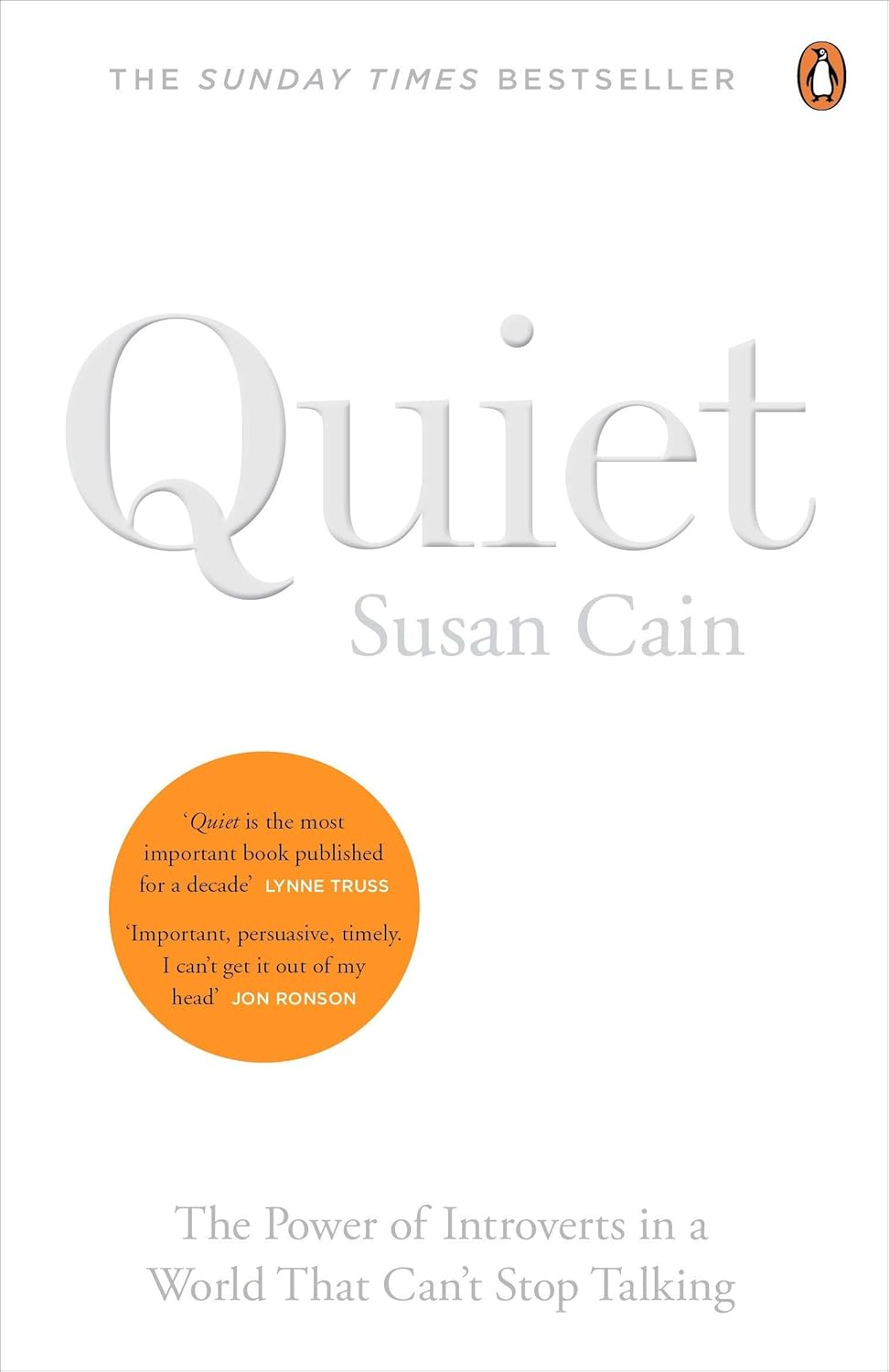
Quiet: The Power of Introverts in a World That Can't Stop Talking: ReadSprint summary highlights
ReadSprint paraphrases for review. These highlights are not verbatim quotations from the book or its author. Check the original edition for exact wording and context.
Quiet: The Power of Introverts in a World That Can't Stop Talking
by Susan Cain
Susan Cain defines the central distinction between introversion and extroversion, explaining them as different temperamental styles that shape how people respond to stimulation and social interaction.
ReadSprint paraphrase · Not a quotation from the author.
Susan Cain defines the central distinction between introversion and extroversion, explaining them as different temperamental styles that shape how people respond to stimulation and social interaction.
The power of introverts.
Share with the ReadSprint source so others can read the context.
Quiet: The Power of Introverts in a World That Can't Stop Talking
by Susan Cain
She outlines the biological and early-development roots of temperament while noting cultural and situational influences.
ReadSprint paraphrase · Not a quotation from the author.
She outlines the biological and early-development roots of temperament while noting cultural and situational influences.
The Science of Introversion.
Share with the ReadSprint source so others can read the context.
Quiet: The Power of Introverts in a World That Can't Stop Talking
by Susan Cain
The power of introverts.
ReadSprint paraphrase · Not a quotation from the author.
The power of introverts.
Build genuine relationships.
Share with the ReadSprint source so others can read the context.
Quiet: The Power of Introverts in a World That Can't Stop Talking
by Susan Cain
The Science of Introversion.
ReadSprint paraphrase · Not a quotation from the author.
The Science of Introversion.
Susan Cain.
Share with the ReadSprint source so others can read the context.
Quiet: The Power of Introverts in a World That Can't Stop Talking
by Susan Cain
Build genuine relationships.
ReadSprint paraphrase · Not a quotation from the author.
Build genuine relationships.
Embracing introversion.
Share with the ReadSprint source so others can read the context.
Quiet: The Power of Introverts in a World That Can't Stop Talking
by Susan Cain
Susan Cain.
ReadSprint paraphrase · Not a quotation from the author.
Susan Cain.
Susan Cain defines the central distinction between introversion and extroversion, explaining them as different temperamental styles that shape how people respond to stimulation and social interaction. She outlines the biological and early-development roots of temperament while noting cultural and situational influences.
Share with the ReadSprint source so others can read the context.
Use these highlights to review the book
Which highlight from Quiet: The Power of Introverts in a World That Can't Stop Talking changes how you would explain the book to someone else?
Which lesson here is worth testing in a real decision this week?
Which highlight feels memorable but less actionable once you slow down and examine it?